The advent of the medical laser has arguably been one of the most transformative developments in healthcare over the last half-century. Once the stuff of science fiction, the focused power of Light Amplification by Stimulated Emission of Radiation (LASER) is now an indispensable tool across dozens of medical specialties, ranging from intricate surgery to non-invasive diagnostics. The benefits of this technology stem from its fundamental characteristics: precision, versatility, and minimal invasiveness.
Moving beyond the traditional scalpel and conventional techniques, medical lasers offer a suite of advantages that translate directly into better patient outcomes. Faster recovery times, and less reliance on aggressive surgical procedures. Understanding the diverse applications of laser technology is key to appreciating its ongoing revolution in modern medicine.
The Core Advantage: Precision and Minimal Invasiveness
The primary benefit that distinguishes the medical laser is its unparalleled precision. Unlike broad surgical instruments that affect surrounding healthy tissue. A laser beam can be focused to a spot size smaller than a millimeter. This allows surgeons to target diseased tissue, tumors, or specific cellular layers with extraordinary accuracy.
1. Pinpoint Tissue Targeting
Lasers work by emitting a specific wavelength of light that is absorbed by particular chromophores (color-absorbing molecules) in the tissue, such as water, hemoglobin, or melanin. By selecting the correct wavelength and energy level, clinicians can achieve various effects:
- Ablation: Vaporizing tissue with minimal thermal damage to surrounding areas (e.g., tumor removal).
- Coagulation: Sealing blood vessels to control bleeding immediately upon cutting, leading to bloodless surgery in many cases.
- Cutting (Incision): Providing an extremely fine, sterile cut, often smoother than a traditional scalpel.
2. Reduced Trauma and Faster Healing
Because laser energy seals nerves and blood vessels as it cuts, the resulting surgical field is cleaner, and the patient experiences significantly less trauma. This directly translates to several crucial patient benefits:
- Shorter Hospital Stays: Procedures that once required several days of recovery can sometimes be performed on an outpatient basis.
- Reduced Pain and Swelling: Less damage to adjacent tissues means less post-operative inflammation and pain.
- Minimized Scarring: The precision of the laser often results in finer, less noticeable scars compared to conventional surgery.
Versatility Across Medical Disciplines
The flexibility of laser technology allows it to be tailored to the specific needs of vastly different medical fields, demonstrating its immense versatility.
Ophthalmology: The Vision Revolution
Perhaps the most well-known application of medical lasers is in ophthalmology. Procedures like LASIK (Laser-Assisted In Situ Keratomileusis) have corrected vision problems for millions, eliminating the need for glasses or contact lenses.
The excimer laser is used to precisely reshape the cornea, correcting refractive errors such as myopia (nearsightedness), hyperopia (farsightedness), and astigmatism. Furthermore, lasers are vital for treating blinding diseases like diabetic retinopathy and glaucoma, by photocoagulating damaged blood vessels or creating drainage paths.
Dermatology and Cosmetic Medicine
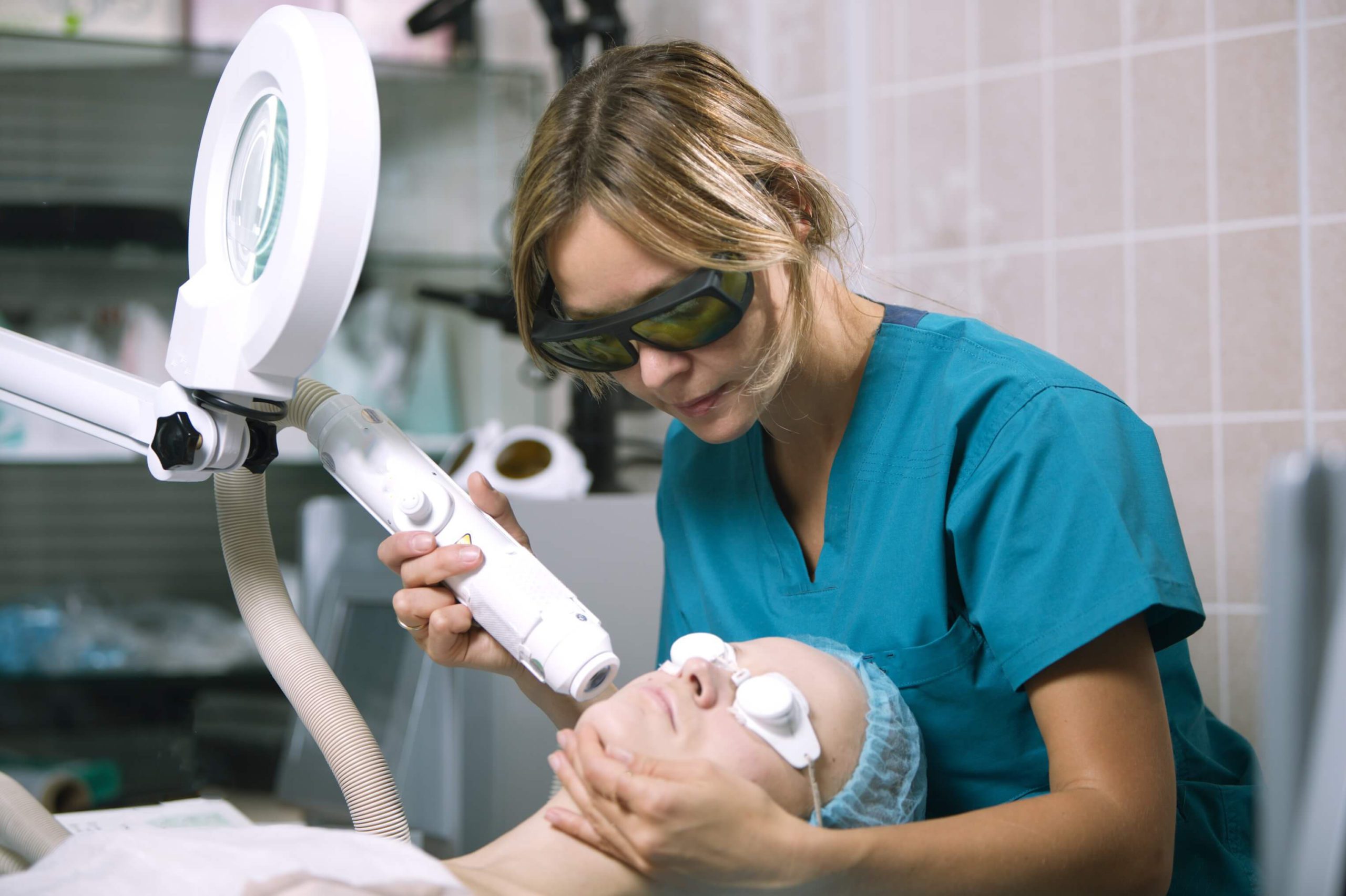
In dermatology, lasers have become the standard tool for treating a wide array of skin conditions. The benefits here are both therapeutic and aesthetic:
- Targeted Pigment Removal: Lasers selectively target melanin to remove unwanted hair, tattoos, and age spots without damaging the surrounding skin.
- Vascular Lesion Treatment: They target hemoglobin to effectively eliminate spider veins, port-wine stains, and broken capillaries.
- Skin Resurfacing: Ablative and non-ablative lasers stimulate collagen production, dramatically reducing wrinkles, scars, and sun damage, achieving significant anti-aging effects with controlled recovery times.
Surgical Specialties: Urology, ENT, and Gynecology
In various surgical fields, lasers offer a minimally invasive alternative to open surgery:
- Urology: The Holmium laser is routinely used to fragment kidney stones (lithotripsy) and treat prostate conditions (like BPH), often through natural body orifices.
- Otolaryngology (ENT): Lasers treat lesions on the vocal cords, remove polyps, and perform delicate sinus surgery with minimal bleeding.
- Gynecology: Lasers are used for excising cervical lesions, treating endometriosis, and performing fertility-sparing surgeries with high precision.
The Future Frontier: Diagnostics and Therapeutic Advancement
The benefits of medical lasers extend beyond surgical intervention. Newer applications are pushing the boundaries of diagnostics and advanced therapeutics.
1. Enhanced Diagnostics
Laser-based technologies, such as Optical Coherence Tomography (OCT) and Confocal Microscopy, use light rather than radiation to generate high-resolution, cross-sectional images of tissue. This non-invasive imaging capability allows doctors to see cell structures in real-time, improving the early detection of diseases like macular degeneration and certain skin cancers.
2. Photodynamic Therapy (PDT)
PDT represents a cutting-edge therapeutic approach, particularly in oncology. It involves administering a light-sensitive drug (photosensitizer) to the patient. When the drug accumulates in cancerous tissue, the subsequent application of a specific low-power laser light activates the drug, which then produces a form of oxygen that selectively destroys the cancerous cells. This method offers a highly targeted, non-toxic treatment with reduced systemic side effects compared to traditional chemotherapy.
Conclusion: A Paradigm Shift in Patient Care
The medical laser is far more than just a powerful beam of light; it represents a paradigm shift toward smarter, gentler, and more effective healthcare. Its unique ability to deliver precise energy with minimal collateral damage provides clear benefits: faster healing, reduced pain, lower risk of infection, and superior cosmetic results. As research continues to unlock new wavelengths and delivery systems, the role of laser technology will only expand, cementing its place as a cornerstone of modern medicine and continuing the revolution in patient care.